



Neighborhood cats can turn a peaceful yard into a constant cleanup job. Flower beds get dug up, mulch becomes a litter box, patio furniture becomes a hangout spot, and the smell and mess can make you dread going outside.
If you want to keep cats out of your yard without chemicals, traps, or messy repellents that wash away, a motion-activated cat deterrent is usually the most practical approach. Instead of trying to “treat” your whole yard, you protect the specific places cats enter and hang out, and the deterrent activates the moment they show up.
That is exactly what The Guardian is designed to do.
Why a motion-activated cat repellent works better than most options
Many cat repellents fall into two frustrating categories:
The Traditional Way
- Scent sprays or granules that need constant reapplication.
- Basic ultrasonic tones that run continuously, covering small areas.
The Guardian Way
- Activates only when motion is detected.
- Combines sonic, ultrasonic, and predator calls.
Cats are creatures of habit. If they learn a route into your garden, they will keep using it until the route becomes unpleasant. A motion-activated deterrent helps with that because it only turns on when a cat enters the zone. Over time, the cat associates that specific area with an annoying experience and stops returning.
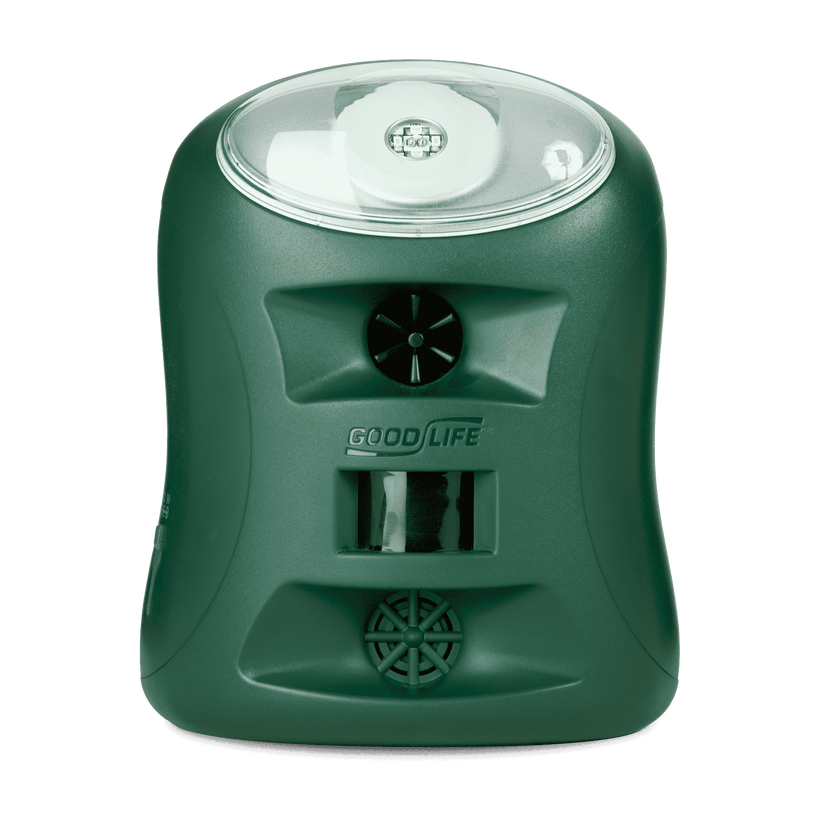
The Guardian uses a thermal motion sensor that can detect approaching animals from up to 60 feet away and then triggers a combination of sonic, ultrasonic, and predator-call patterns. For cats, the key is simple: set the dial to Setting 3 and aim it at the area you want protected.
What The Guardian is and what it is not
The Guardian is a sound-based, motion-activated deterrent designed to encourage cats to leave an area. It is intended for people who want a “set it up and let it run” solution, without traps, poisons, or chemical mess.
It is not a magic force field that instantly fixes every yard with zero effort. Like any motion-activated device, results depend heavily on placement and aim. The good news is that once you understand where cats enter and where they like to hang out, setup is straightforward.
The best setting for cats
If you only read one section, read this: Set The Guardian to Setting 3 for cats.
Setting 3 is the cat-focused option on the Select-a-Pest dial. It is the best starting point, and it is the setting you should stick with while you dial in placement.

Where to place The Guardian for the best results with cats
Most people make one mistake with cat deterrents: they place them in the middle of the yard and hope it covers everything. Cats do not wander randomly. They use routes.
Your goal is to place The Guardian so it targets the route cats use to enter the problem area, especially these common spots:
- The edge of a garden bed
- A gate opening or fence gap
- A side yard path between the fence and the house
- The base of porch steps
- A mulch patch that cats keep digging in
Aim at the entry point
Target the specific gap or fence line the cat uses to enter.
Protect the edge
Place the unit near the border of garden beds, facing outward.
Keep line of sight clear
Avoid tall plants or shrubs directly in front of the sensor.

Quick placement guide for common cat problems
- Cats using your garden as a litter box: Place near the bed edge, aimed at the approach path.
- Cats sleeping on patio furniture: Aim at porch entrance or steps, triggering before they jump up.
- Cats cutting through side yards: Aim down the "cat highway" lane between fence and house.
- Cats digging in mulch: Cover the patch from the approach angle, not from straight above.
Setup: a simple step-by-step you can follow
Step 1: Choose your power option
Use the included AC adapter or 6 C batteries for cordless placement.

Step 2: Pick the zone you want to protect
Choose one location first: a garden bed, porch, or side yard path.
Step 3: Mount or place it with a clear view
Position it facing the entry route with a clean line of sight.
Step 4: Turn the dial to Setting 3
This is the cat setting. Keep it here while testing placement.
Step 5: Add the detachable strobe light if cats visit at night
The strobe adds an extra "go away" signal for nocturnal visitors.
Step 6: Leave it consistent for a bit
Do not move it every day. Give the cat time to learn the area is unpleasant.
How much area does it cover?
The Guardian covers up to 5,000 square feet in open areas. In real yards, coverage depends on line of sight, obstacles, and how you aim it.
For cats, you will usually get better results by aiming it precisely at the entry lane rather than trying to blanket the entire yard. If your yard has two major entry routes, you may eventually want a second unit so each route is covered properly.
How to get better results faster
- Make the route inconvenient: Block fence gaps or open crawl spaces.
- Remove what attracts them: Reduce outdoor pet food, bird seed, or open trash.
- Use a camera if you can: Identify the exact route and time of day cats arrive.
- Adjust aim before changing anything else: Placement is usually the first fix needed.
Common questions about using a cat repellent device
Will it hurt cats?
The Guardian is designed to deter cats using sound patterns and an optional strobe light, without traps, poisons, or chemicals. It encourages cats to leave the area instead of harming them.
Will it bother my own pets?
If you have indoor cats, place the unit so it targets the outdoor approach area and not windows or doors where your pets spend time.
Will I or my neighbors hear it?
Sound-based deterrents vary by environment. If concerned, aim the unit toward the problem zone and away from neighboring property lines.
A simple cat placement checklist
- ☐ Identify the main cat entry path (fence line, gate, side yard lane)
- ☐ Place The Guardian facing that path with a clear line of sight
- ☐ Set the dial to Setting 3 for cats
- ☐ Keep it near the edge of the problem area, not the center of the yard
- ☐ Add the strobe light if cats visit mostly at night
- ☐ Adjust aim after several days if needed
Final thoughts
Keeping cats out of your yard is usually less about “stopping every cat everywhere” and more about protecting the exact routes and spots they use. A motion-activated deterrent makes that easier because it triggers right when the cat approaches, reinforcing that your garden, porch, or side yard is not a comfortable place to return to.